
Young people on Kilimanjaro
Young people on Kilimanjaro
Many parents look at photos of Mount Kilimanjaro and think, “My kid hikes all the time. Could they do this too?” It is a fair question, and it deserves a clear, safety-first answer.
A 7 year old should not climb Kilimanjaro to the summit. In most cases, they cannot legally attempt it, and even if rules were not a barrier, the altitude and cold create risks that are hard to justify at that age.
The practical answer most families need
Kilimanjaro is not technical climbing, but it is high altitude trekking to 19,341 feet (5,895 m). That single fact changes everything.
At 7, a child is still developing the ability to regulate body temperature and may struggle to describe early altitude symptoms reliably. Adults can miss the warning signs too, but young children are at a disadvantage because they cannot always explain what feels “off,” and they can deteriorate quickly if a problem is missed.
One more reality: a Kilimanjaro trip is long days, cold nights, limited privacy, and a lot of waiting around in camp. Some kids love that. Some do not. The summit is only one part of the experience, and the experience itself has to match the child, not the parent’s dream.
Park rules and age limits (what is actually allowed)
Before training plans, gear lists, and route maps, start with the basic permission question.
Kilimanjaro National Park rules set a minimum age for a summit attempt, and reputable operators follow those rules strictly. That means a 7 year old typically will not be permitted to climb to the top.
Even when families are willing to accept the risks, responsible guiding teams do not work around safety policies. Those policies exist because rescues are real on Kilimanjaro, and altitude illness does not care how fit, motivated, or experienced someone is.
That said, families can still enjoy Kilimanjaro responsibly without going to the summit. Lower elevation hikes on the mountain and nearby areas can be excellent, memorable adventures for younger children.
Why 7 is a tough age for high altitude
Altitude affects children and adults in broadly similar ways, but very young children have extra challenges.
The main issues to respect are:
- How they communicate: a child might say “my tummy feels weird” or “I’m tired,” which could mean normal fatigue, fear, dehydration, cold stress, or early acute mountain sickness.
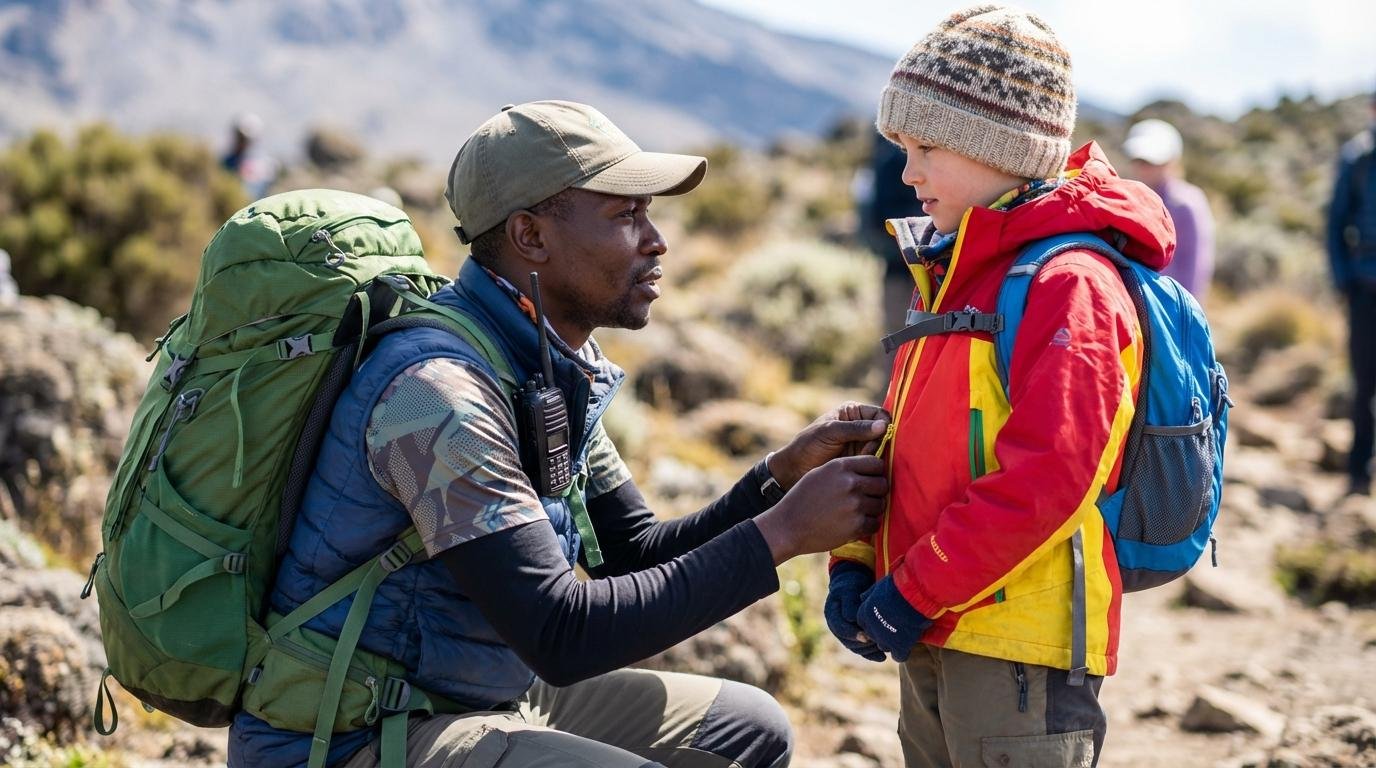
- How they stay warm: smaller bodies lose heat faster, and kids are often less consistent about gloves, hats, zippers, and drinking water when it is cold.
- How fast they can shift from okay to not okay: the earlier a guide decides to stop, rest, or descend, the better the outcome tends to be.
Altitude illness can begin at elevations that are far below Kilimanjaro’s higher camps. So even “just a few days” on the mountain can bring symptoms into play. A safe plan assumes that anyone can be affected, then builds layers of monitoring and conservative decision-making around that assumption.
What “ready” looks like for kids who are old enough
Families often ask, “If my child is strong and athletic, does that make it safe?” Fitness helps with long walking days, but it does not guarantee good acclimatization.
When a child is at or above the minimum age, readiness looks less like a gym score and more like consistent behaviors over time. After you have talked with a pediatrician and a qualified travel medicine clinician, it helps to look for practical signs that the child can handle a multi-day expedition style trip.
A useful checklist usually includes things like:
- Enjoys hiking even when it is not exciting
- Sleeps well away from home
- Comfortable using a sleeping bag
- Can follow safety instructions when tired
- Can speak up quickly about pain, nausea, dizziness, or headache
If those points feel uncertain at home, they will feel harder at altitude in the cold, after a long day.
The itinerary matters more than almost anything
On Kilimanjaro, the fastest itineraries are usually the hardest on the body. That is especially true for younger trekkers who need a slower build in sleeping altitude and more time to recover day by day.
Longer routes with better acclimatization profiles are often chosen for safety and comfort, not because they are “easy.” They simply give the body more time to adjust.
Here is a quick comparison families often find helpful:
| Goal | Typical approach | Why it helps | Best fit for |
|---|---|---|---|
| Summit attempt | Longer itinerary (often 8 to 10 days) | More acclimatization time, steadier pace | Older teens and adults, and eligible younger trekkers who do very well at altitude |
| High-elevation taste of Kili (no summit) | Lower camps or shorter segments, staying conservative on sleeping altitude | Big scenery with fewer high altitude nights | Families with younger kids |
| Day hike experience | rainforest zone day hike or nearby trails | Fun, active, culturally rich, easier logistics | Kids who want the “I hiked on Kilimanjaro” story |
A conservative itinerary also gives guides more options. Extra time can mean an acclimatization walk, an unhurried morning, or a pause to manage early symptoms before they become serious.
What a family-focused safety plan should include
Families sometimes assume that Kilimanjaro safety is just “have a guide.” On a family trip, the safety system needs to be more intentional than that.
The support plan should be visible in daily routines, staffing, and decision-making authority on the mountain. When evaluating an operator, look for clear answers on how they monitor health and how they handle turn-around decisions.
A strong approach usually includes:
- Daily health checks: regular symptom questions, not just “How are you?”
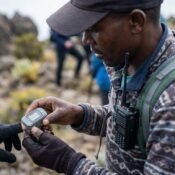
- Oxygen monitoring: pulse oximeter trends as one data point, not the only one
- Pace discipline: a slow, steady walking speed that prevents exhaustion
- Warmth management: proactive layering, dry socks, and attention to wind chill
- Hydration and fueling: making eating and drinking non-negotiable
- Descent authority: guides empowered to turn around early when warning signs appear
This is where a comfort-first style matters. Warm sleeping systems, quality tents, dependable transport, and solid pre-climb planning reduce stress, and lower stress makes it easier to notice real medical issues.
At Beyonds Average, the guiding philosophy is built around wellbeing, acclimatization, and conservative pacing, with licensed local guides and itineraries designed to give trekkers time to adjust. For families, that mindset is the baseline, not an upgrade.
A better way to think about “success” with young people
With kids, the summit should never be the only “win.” A safe mountain experience is one where the child finishes feeling proud, cared for, and eager to hike again.
On Kilimanjaro, the strongest teams celebrate camp-to-camp progress, good hydration habits, and smart choices. Turning around can be a success, too, when it is the right call for safety.
It also helps to set expectations early: summit night is cold, dark, and long. Even adults often find it to be the hardest part of the trip. Kids who do best are those who are comfortable being uncomfortable, and who can keep moving slowly without panic when the environment feels unfamiliar.
Kid-friendly alternatives that still feel like Kilimanjaro
If your child is 7, you can still build an amazing Tanzania adventure around Kilimanjaro without putting them in an unsafe or non-permitted situation.
After you decide that summiting is a “later” goal, consider options that deliver the magic while staying age-appropriate.
Many families enjoy:
- A rainforest zone day hike on Kilimanjaro
- A cultural visit near Moshi or Arusha paired with short nature walks
- A multi-day hike at lower elevations in Tanzania with lodge comfort
- A safari add-on that keeps energy high and logistics easy
These trips often create the same lasting memories: new landscapes, shared effort, and the pride of doing something real together.
Planning steps that make everything safer
If you are planning for a future attempt when your child is old enough, start with the long game. The goal is not to “train harder,” it is to build comfort with time on feet, variable weather, and honest communication.
A good planning rhythm looks like this:
- Medical check-ins with a pediatrician and travel medicine clinician familiar with altitude travel
- Several practice hikes that include cold mornings or light rain, with full layering systems
- Overnight trips where the child manages their own small routines, headlamp, snacks, water
- A route choice that prioritizes acclimatization days over speed
- A clear family agreement that guides can end the climb if safety calls for it
If you want help mapping out a responsible family plan, a good operator will talk openly about age, park rules, and conservative options, even when it means recommending a different trip this year.
Kilimanjaro will still be there when your child is ready. The best timing is the one that protects their health, builds their confidence, and makes them want to come back to the mountains again.
All Categories
Recent Posts
best time to climb kilimanjaro
Kilimanjaro best operator