

Kilimanjaro Packing List: What to Bring for a Safe, Comfortable Climb
Kilimanjaro Packing List: What to Bring for a Safe, Comfortable Climb
Packing for Mount Kilimanjaro is different from packing for almost any other trek. On the same climb you can sweat in a humid forest, get rained on in the moorland, and stand in biting wind on summit morning. The goal is not to bring “more stuff.” The goal is to bring the right system so you stay warm, dry, fueled, and able to make good decisions when altitude starts to slow everything down.
At Beyonds Average, we see packing as part of safety planning, right alongside acclimatization and pacing. When your layers work, your feet stay healthy, and your daypack is organized, you conserve energy for what matters: steady steps, steady breathing, and steady progress.
Think in systems, not items
A Kilimanjaro packing list makes more sense when you separate gear into three jobs:
- Keep you functional while moving (daytime hiking layers, sun protection, water, snacks).
- Keep you safe when conditions turn (rain shell, insulation, lighting, basic medical items).
- Help you recover at camp (sleep system, warm layers, dry clothing).
That mindset stops the classic mistake of packing duplicates that do the same thing. It also helps you avoid leaving behind one small item that can cause big discomfort, like glove liners or a dry bag.
Duffel bag vs daypack: what goes where
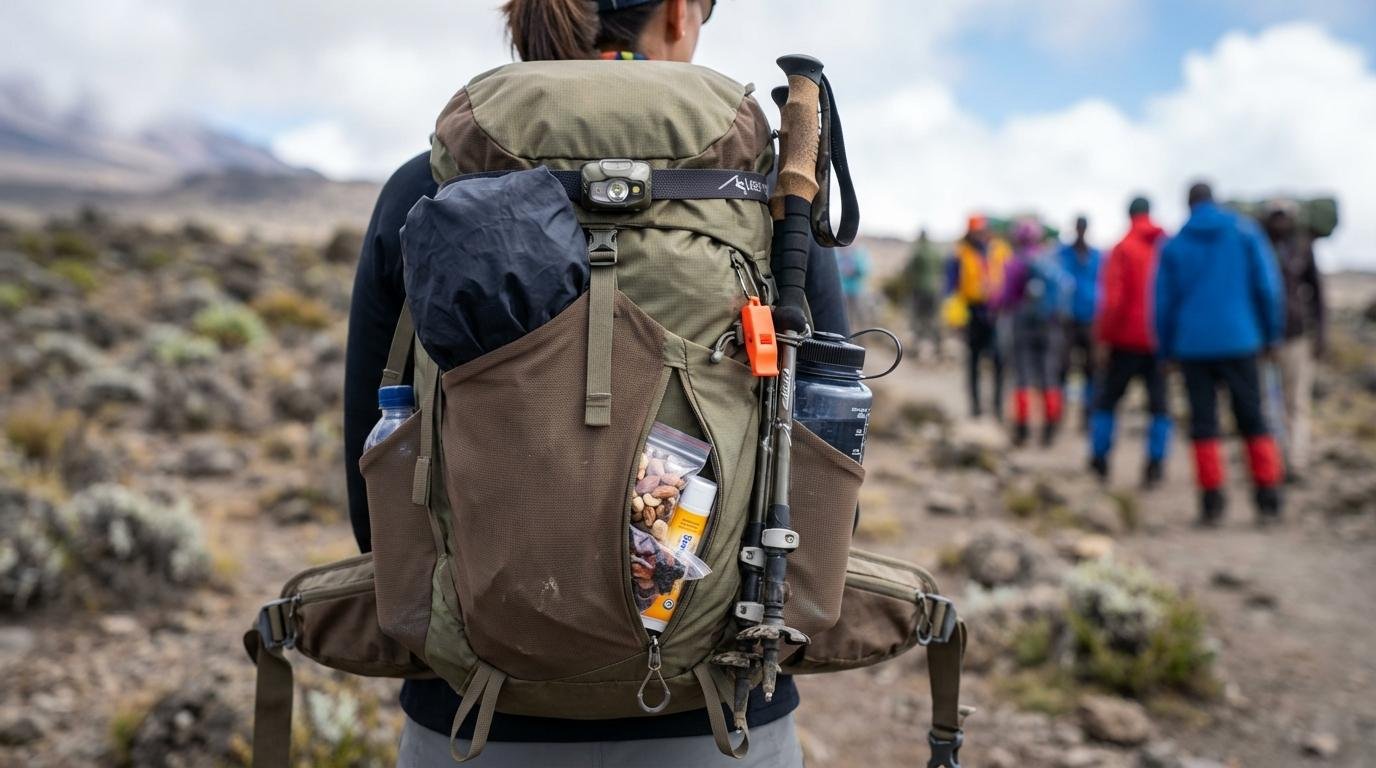
Most guided climbs use a simple approach: you hike with a daypack, while porters carry a larger duffel that meets your operator’s weight and waterproofing rules. Your daypack is your “access kit” for the hours you are away from camp.
The table below is a practical way to sort gear so you do not end up cold, thirsty, or stuck without the one item you needed right now.
| Item category | Daypack (with you) | Duffel (ported to camp) |
|---|---|---|
| Warmth layers | Mid layer, insulating jacket on cold days, gloves, beanie | Spare base layers, heavier insulation, sleep socks |
| Weather protection | Rain jacket, rain pants (if clouds build), pack cover | Spare dry bags, backup rain mitts |
| Hydration & fuel | Water bottles or bladder, electrolytes, trail snacks | Extra snacks, drink mixes |
| Safety essentials | Headlamp, sun glasses, sunscreen, lip balm, whistle | Backup batteries, repair tape, spare headlamp (optional) |
| Health & hygiene | Personal meds, blister care, hand sanitizer | Wipes, toilet kit supplies, extra sunscreen |
| Electronics & documents | Phone/camera (optional), small power bank | Larger power bank, charging cables, travel documents stored dry |
If you can’t decide where an item belongs, ask one question: “Would I regret not having this between breakfast and arriving at camp?” If yes, it belongs in the daypack.
Clothing: layer for five climates
Kilimanjaro is famous for big temperature swings, and wind can make cold feel sharper. A layered system lets you vent heat on steep climbs and bundle up fast when you stop.
After a paragraph like this, a checklist helps, but keep it focused. These are the core layers most trekkers rely on:
- Base layers: Moisture-wicking synthetic or merino tops and bottoms, no cotton
- Mid layers: Fleece or light insulated jacket that breathes while hiking
- Insulation: A warm down or synthetic parka for summit night and cold evenings
- Shell: Waterproof jacket with hood, waterproof pants with full side zips if possible
- Trekking pants: One or two pairs, quick-dry fabric
- Head and neck: Sun hat, warm beanie, neck gaiter or buff
A small but meaningful tip: bring layers you can operate with cold hands. Big zipper pulls and simple fasteners matter at 5,000 meters.
Gloves and mittens: plan for dexterity and warmth
Cold hands can turn a routine task into a struggle. A good glove system usually has three parts: a thin liner, a warm glove, and a waterproof or windproof shell mitten for summit morning.
If you only bring one pair and they get wet, the rest of the climb feels harder than it needs to. It is one of the most common comfort issues we see.
Footwear and foot care: protect your summit chances
Your boots do not need to be heavy “expedition” boots for most people, but they do need to be broken-in, supportive, and compatible with warm socks. Waterproofing is helpful because rain and mud are real on lower sections, and wet feet get cold fast later in the climb.
Bring gaiters if your route is dusty, muddy, or snowy. They keep grit out of your boots and reduce friction that leads to blisters.
Blister prevention is not glamorous, but it is performance. Treat hot spots early, keep feet clean, and rotate socks so you always have one dry pair for camp.
Sleep system: recovery is part of safety
Many people focus on summit night and forget the nights before it. If you sleep poorly for several days, you start each morning already behind.
Aim for a sleeping bag rated around minus 10 C as a baseline, with extra margin if you tend to sleep cold. Pair it with a quality sleeping pad. The pad matters because it blocks cold ground from draining heat all night.
A simple liner can add warmth and keeps the inside of your bag cleaner. You will appreciate that by day five.
Hydration and snacks: the “small, often” strategy
At altitude, appetite can drop and drinking can feel like work. Your plan should make both easier.
Use a mix of water capacity that works in cold conditions. Bladders are convenient, but hoses can freeze higher up. Wide-mouth bottles are slower to drink from but more reliable in freezing air. Many trekkers carry both and switch as temperatures change.
After a paragraph, here are a few snack ideas that work well because they are easy to eat, tolerate cold, and fit in pockets:
- Trail mix
- Energy bars
- Jerky
- Dried fruit
- Hard candies
- Nut butter packets
Bring snacks you already know your stomach likes. Kilimanjaro is not the place to test a brand new gel.
Health and safety items: what you should personally carry
Your guiding team will typically carry group safety equipment and conduct regular wellness checks, yet each climber should still have a small personal kit. Think of it as your ability to handle minor problems before they become trip-ending problems.
A good personal kit is compact, realistic, and tailored to you. It should cover:
- Personal prescriptions: Bring enough for the trip plus a few extra days
- Pain relief: A medication you tolerate well, with clear dosing instructions
- Stomach support: Anti-diarrheal tablets and oral rehydration salts
- Blister care: Tape, blister dressings, small scissors or a mini blade
- Altitude plan: Talk with your clinician about acetazolamide and how to take it
- Sun protection: SPF 50 sunscreen and SPF lip balm
Add a small roll of athletic tape. It is useful for blisters, minor strains, and quick gear fixes.
Light and power: non-negotiable for summit night
A reliable headlamp is required for the summit push, which often starts well before sunrise. Bring spare batteries and keep them warm inside your jacket at higher camps. Cold drains batteries faster.
A power bank is optional but very helpful if you use your phone for photos, reading, or offline notes. Keep charging simple: one short cable, one power bank, one protected bag.
Organization that saves time and keeps gear dry
Kilimanjaro is a wet mountain at times. Even during drier months, condensation and brief storms happen. Your packing method should assume that anything not protected can get damp.
Use dry bags or waterproof stuff sacks to separate:
- sleeping clothes
- hiking clothes
- insulation
- electronics
Packing cubes work too, as long as they go inside a waterproof liner.
Weight matters as well. Keep your daypack light and stable. Put heavier items close to your back and centered, not swinging at the bottom. A well-fitted hip belt carries weight on your hips, not your shoulders.
Small comfort items that earn their place
Most comfort items are optional, yet a few give real value for very little weight. After a full day on the trail, these can help you eat, sleep, and start strong the next morning.
- Camp shoes
- Earplugs
- Wet wipes (packed out)
- A small travel towel
- Hand warmers
If you add comfort items, do it intentionally. One or two is smart. Ten turns into unnecessary weight.
Common packing mistakes that can derail a climb
People rarely fail a climb because they forgot one “magic” item. More often, the problems stack up: wet layers, cold hands, poor sleep, sore feet, then slower pace and less time to recover.
Here is a short checklist to keep you out of the most common trouble spots:
- Pack cotton clothing and hope it dries fast.
- Bring a warm jacket but skip waterproof layers.
- Carry too much in the daypack “just in case.”
- Forget that sun exposure is intense even when the air is cold.
- Break in boots on the mountain instead of at home.
A careful packing plan supports every other good decision you will make on Kilimanjaro: pacing slowly, drinking regularly, eating enough, and speaking up early when something feels off.
All Categories
Recent Posts
best time to climb kilimanjaro
Kilimanjaro best operator